|
Welcome to our December Newsletter and the final edition of the year! We’re ending with a bang, launching a complete Terracotta Army lesson series that includes a reading test, summary writing task, listening test, speaking test, and seminar discussion, allowing students to explore and analyse this iconic topic in depth.
|
These lessons combine carefully graded, academic skills-focused tasks covering comprehension, key vocabulary, and critical thinking, making them ideal for EAP, foundation, and pre-sessional courses. Perfect for English for Art, History, and Cultural Studies, the series includes full teacher support and answer keys, helping students develop both subject knowledge and essential academic skills with confidence.
|
FREE WORKSHEET: The Terracotta Army Speaking Test (link only valid for 2 weeks)
|
|
Merry Christmas everyone!
|
|
Thank you for your support throughout 2025.
|
The AEUK Team
Newsletter #175
|
|
|
|
The Terracotta Army
|
|
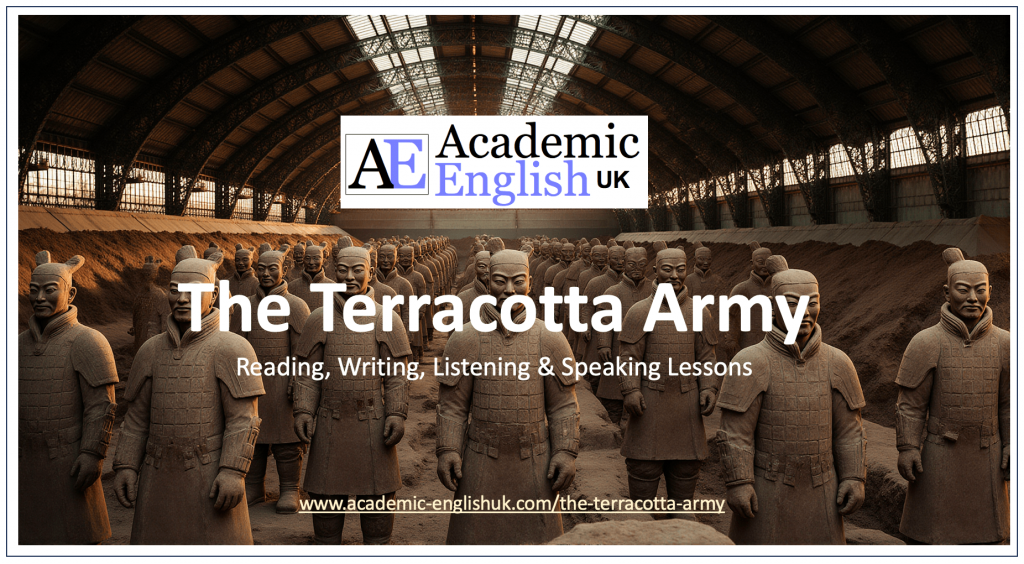
The Terracotta Army is a vast funerary complex built for China’s first emperor, Qin Shi Huang (259–210 BCE), after his unification of China in 221 BCE. Buried beside his mausoleum and discovered by accident in 1974 by farmers digging a well, the army symbolises imperial power and protection in the afterlife. Comprising over 7,000 individually crafted warriors made using advanced production techniques, the site demonstrates the Qin state’s technological and administrative capacity, while conservation remains a major challenge due to damage caused by excavation.
|
|
|
|
Downloads
|
|
|
|
|
The Terracotta Army Lesson PDF Book
|
|
|
|
|
|
|
Video Lecture
|
A short 11:25 minute PPT lecture on ‘The conservation of the Terracotta Army’.
|
|
If you can’t access YouTube in your country, go here
|
|
|
Listening Test: The Conservation of the Terracotta Army
|
This listening test examines the scientific, ethical, and practical challenges of conserving the Terracotta Army. Question types include gap-fills, definition writing, true/false questions, open-ended responses, and multiple-choice. It also includes teacher’s notes, pre-listening vocabulary task, note-taking pages, answer key and full transcript with highlighted answers.. EXAMPLE Level *****[B1/B2/C1] VIDEO [11.25] / MP3 / PPT in DOWNLOAD / TEACHER MEMBERSHIP / INSTITUTIONAL MEMBERSHIP
|
|
|
|
|
|
Reading Test: The Terracotta Army
|
This reading test explores the discovery, construction, purpose, and conservation of the Terracotta Army, one of the most extraordinary archaeological finds of the twentieth century. The reading test includes: matching headings to paragraphs; true / false; reference words; citations; and a vocabulary task. EXAMPLE Level ***** [B1/B2/C1] TEACHER MEMBERSHIP /INSTITUTIONAL MEMBERSHIP
|
|
|
|
|
|
|
|
Writing Summary: The Terracotta Army
|
This summary writing explores the discovery, construction, purpose, and conservation of the Terracotta Army, one of the most extraordinary archaeological finds of the twentieth century The summary task includes: note-taking worksheet with key, summary writing exercise with one sample summary, and a critical thinking worksheet with suggested answer. EXAMPLE. Level ***** [B1/B2/C1] TEACHER MEMBERSHIP / INSTITUTIONAL MEMBERSHIP
|
|
|
|
|
|
|
|
FREE LESSON
The Terracotta Army Speaking Test
|
This academic speaking test is similar to the Cambridge B2 First (FCE) speaking exam. It provides valuable speaking practice around the topic of the Terracotta Army. The test is divided into four parts; general topics, photograph comparison, a task and opinion based questions. Level ** [B1/B2/C1]
|
|
|
|
|
|
|
|
English for ART: Vocabulary Workbook
|
|
|
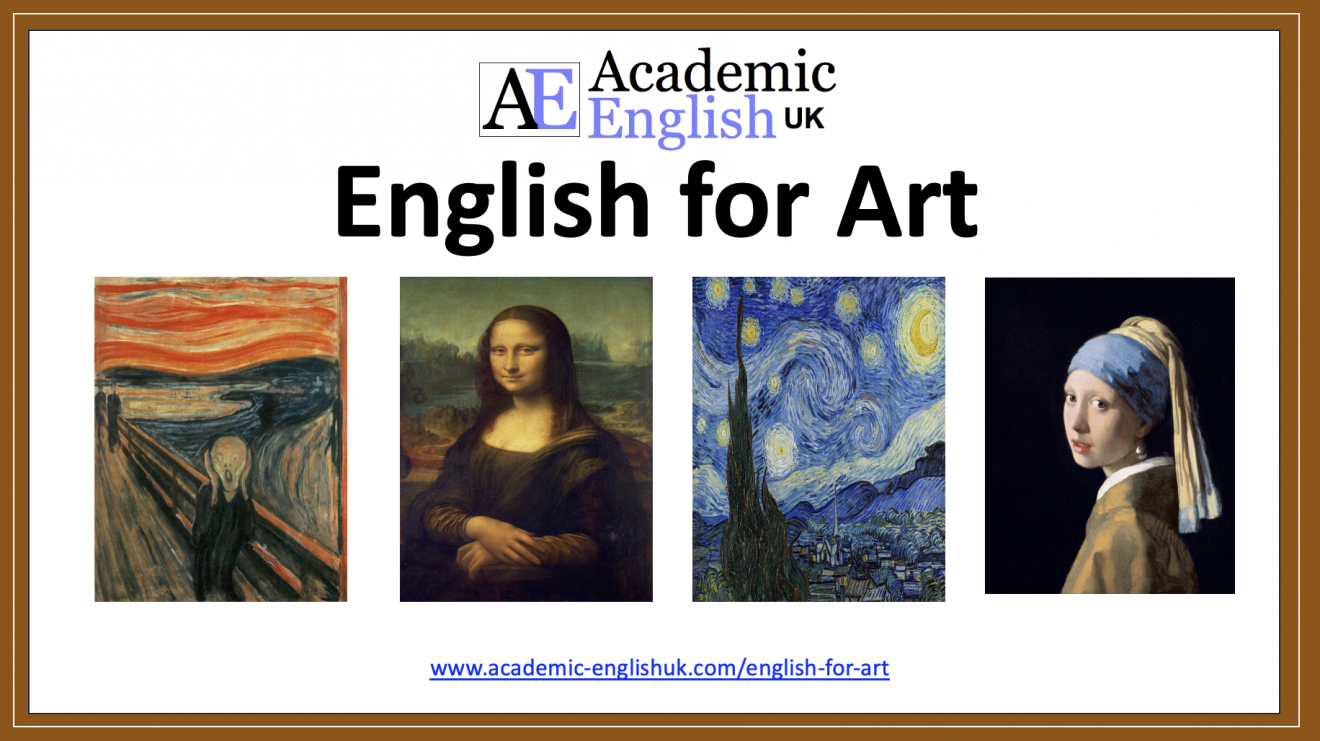
November 2025 "English for Art" refers to specialised English language instruction that develops vocabulary and communication skills relevant to visual arts, art history, and related ....
|
|
|
|
|
|
October 2025. Generative AI (Gen AI) is transforming higher education for better or for worse. This blog post includes an introductory lesson to the benefits and risks of AI and a 14-minute lecture on...
|
|
|
|
|
|
English for ART: Grammar Workbook
|
|
|
Aug / Sept 2025. "English for Art" refers to specialised English language instruction that develops grammar, and communication skills relevant to visual arts, art history...
|
|
|
|
|
|
British vs American English
|
|
|
July 2025 British Vrs American English. The main differences between British (BrE) and American (AmE) English are three main areas: 1) Vocabulary 2) Spelling 3) Pronunciation...
|
|
|
|
Academic Research Report Writing
|
|
|
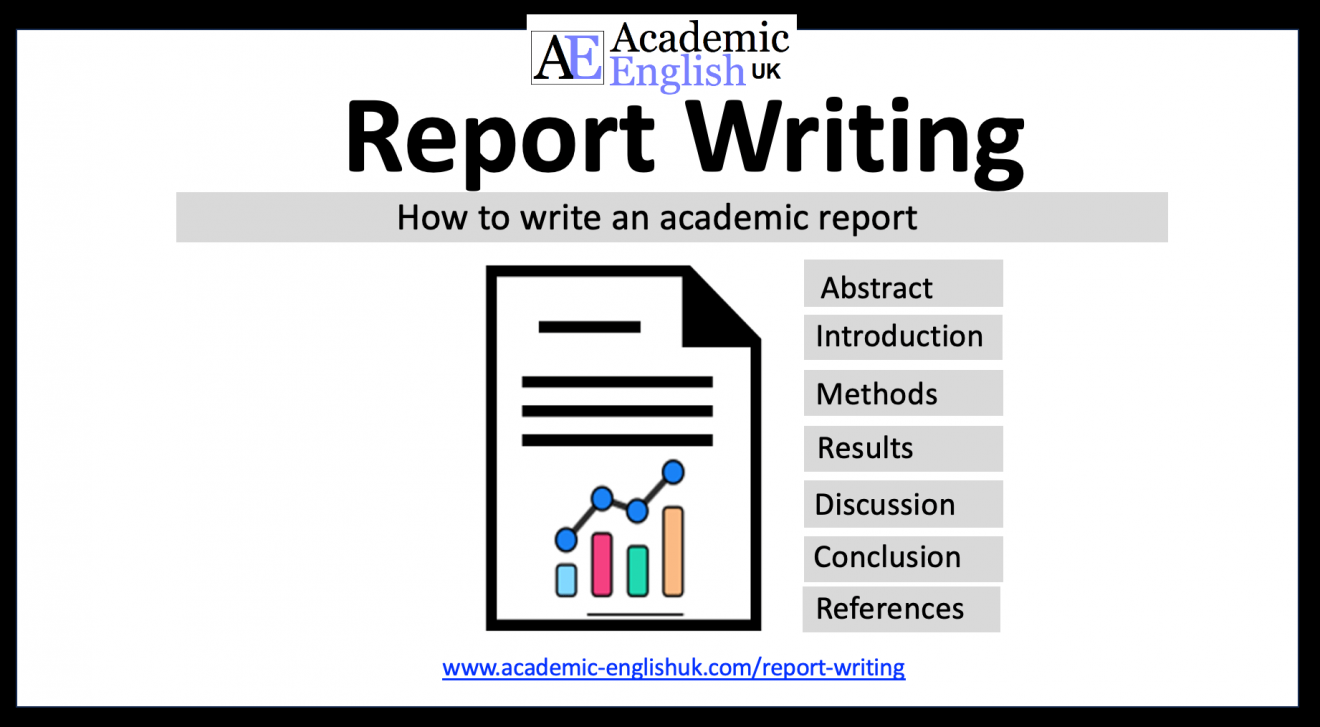
April / May 2025. Academic Research Report Writing. An academic report is a structured document that presents information, analysis, and findings on a specific topic or research …
|
|
|
|
|
|
Error Correction in Writing
|
|
|
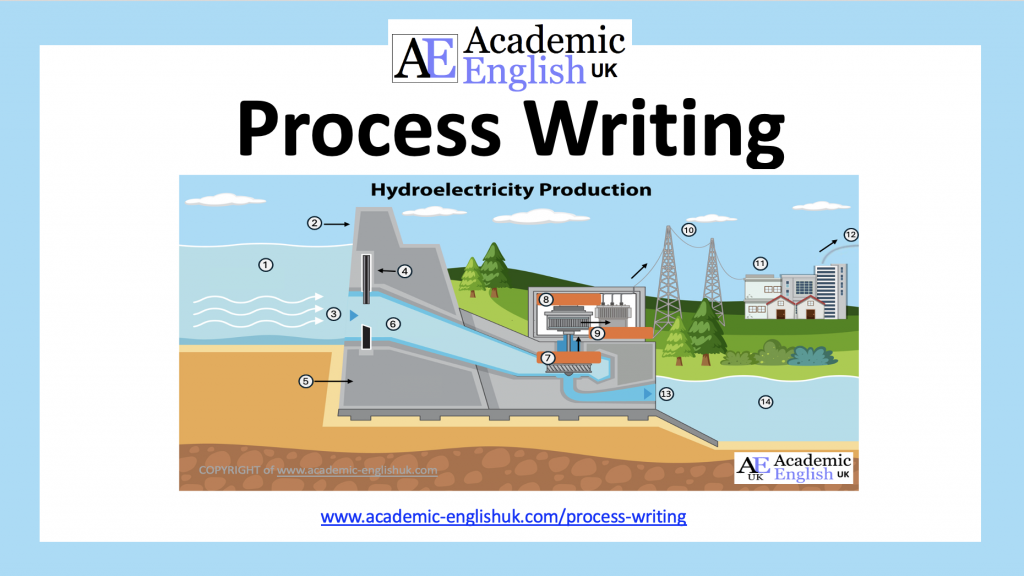
March 2025. Process writing provides a step-by-step description of how something operates or is produced. The explanation includes a range of writing skills: Describe the process in detail...
|
|
|
|
|
|
Error Correction in Writing
|
|
|
Jan & Feb 2025. Error Correction in Writing. These are a selection of lessons that focus on one specific error (prepositions, articles, tenses, wrong word, relative clauses, etc..) in a short ...
|
|
|
|
|
|
Dec 2024 Over the last 12-months of 2024 we created 70 new resources from error correction texts to critical thinking exercises. New releases for 2024 Writing Lessons, vocabulary ...
|
|
|
|
|
|
Dialogic Feedback in Academic Writing
|
|
|
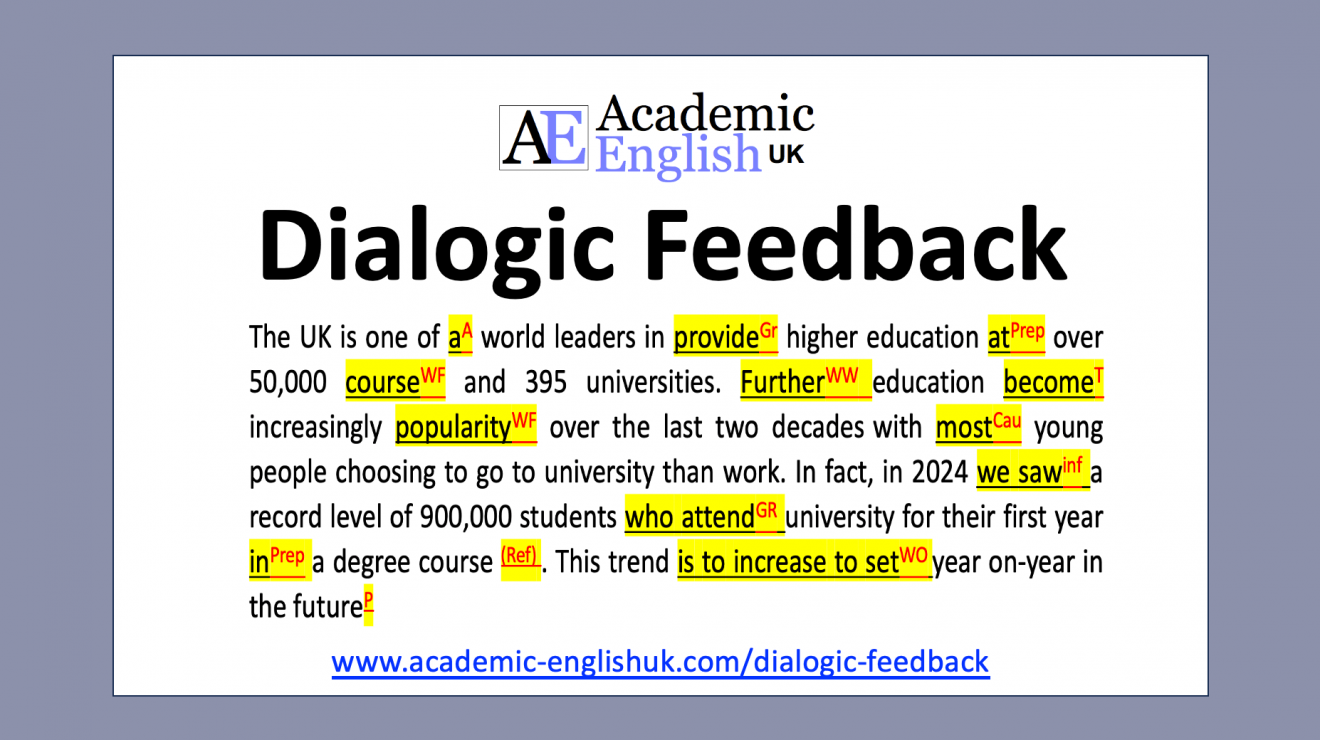
Nov 2024 “Dialogic feedback is a way of providing feedback that involves a conversation between a teacher and student, rather than a one-way transmission of information. It's a collaborative ...
|
|
|
|
Want more BLOG articles? Go here for all our 2025 blogs...
|
|
|
|
|