|
|
Happy New Year and welcome to our January Newsletter.
|
We’re excited to introduce our new AI-Supported Writing 10-Lesson Workbook, designed to help international students build confident, academic writing skills for university study. Across ten carefully structured lessons, students progress from sentence accuracy to paragraph-level writing, developing control over vocabulary, grammar, cohesion and academic style. AI is used responsibly to support noticing, checking and reflection, helping students evaluate their writing decisions while maintaining academic integrity. See below for more details.
|
FREE WORKSHEET: LESSON 1: Sentence Accuracy – Identifying Errors
|
The AEUK Team
Newsletter #177
|
|
|
|
What is the AI-Supported Academic Writing Workbook?
|
This AI-Supported Academic Writing Workbook is designed for international university students and develops sentence- and paragraph-level academic writing skills through the theme of education and learning in the digital age, with lessons progressing from accuracy and clarity to cohesion, hedging and summary writing. Across ten structured lessons, students use AI tools responsibly to check, compare and reflect on their writing, helping them build confident control of academic language without relying on AI to generate content.
|
|
Booklet Contents
|
|
|
|
|
|
|
|
General features of digital learning.
|
|
|
Sentence accuracy: identifying errors.
|
|
|
|
|
Digital learning tasks and activities.
|
|
|
Sentence meaning and precision.
|
|
|
|
|
AI-powered personalised learning.
|
|
|
Academic vocabulary choice.
|
|
|
|
|
Online discussion forums.
|
|
|
Collocation and natural academic phrasing.
|
|
|
|
|
Student engagement in digital learning.
|
|
|
Sentence combining and complexity.
|
|
|
|
|
Immersive learning with VR and AR.
|
|
|
Nominalisation and academic style.
|
|
|
|
|
Mobile-first learning design.
|
|
|
Hedging and cautious language.
|
|
|
|
|
Challenges and limitations in digital learning.
|
|
|
Cohesion within a paragraph.
|
|
|
|
|
Automated assessment in higher education.
|
|
|
Summary writing in academic contexts.
|
|
|
|
|
Digital technology and learning in higher education.
|
|
|
Final integrated writing task and reflection.
|
|
|
ANSWER KEY |
|
Examples of how AI is used in the classroom
|
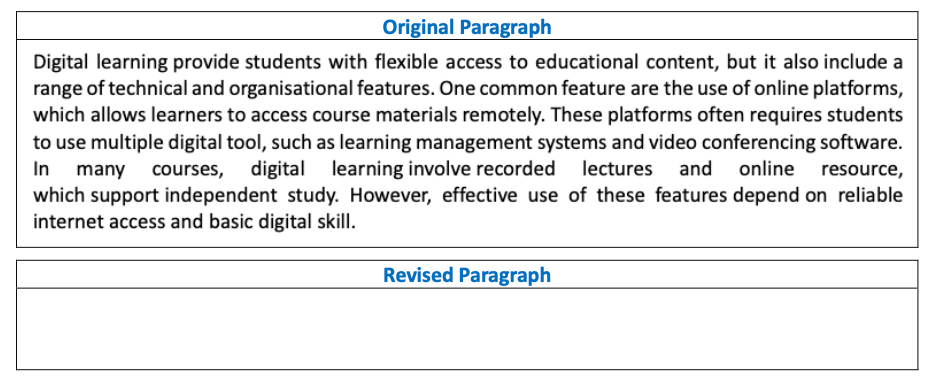
Task 2: Sentence editing practice
|
|
The paragraph below contains TEN grammar errors. Find and correct them.
|
|
|
|
Task 3: AI-supported error identification
|
|
Now use an AI tool such as ChatGPT or M365 Copilot to support your learning. Use these exact steps.
|
|

|
|
Task 4: Independent writing
|
|
Write FIVE academic sentences on ‘the general features of digital learning’.
|
- Focus on grammar accuracy, not complexity.
- Focus on subject-verb agreement and singular/plural nouns.
- Write clear, complete sentences.
|
⚠ Do NOT use an AI tool while writing.
|
|
|
Step 1: Check your own writing
|
Read your sentences and tick (✓) the statements that are true.
|
|
|
|
All verbs agree with their subjects.
|
|
|
|
|
|
Singular and plural nouns are used correctly.
|
|
|
|
Step 2: Use an AI tool to support your learning
|
|
Copy and paste your sentences and the following prompt into the AI tool.
|
|

|
|
|
Downloads
|
|
|
|
|
LESSON 1: Sentence Accuracy-Identifying Errors
|
Sample Lesson 1 focuses on developing sentence-level grammatical accuracy, particularly subject–verb agreement and singular/plural nouns, using short academic sentences on digital learning as practice. It introduces controlled use of AI to help students check and reflect on their own corrections, laying the foundation for the remaining lessons in the ten-lesson sequence. Level ***** [B1/B2/C1]
|
|
|
|
|
|
AI-supported Academic Writing 10-Lesson Workbook
|
The AI-Supported Writing Workbook helps international students develop clear, accurate academic writing for university study. Lessons progress from sentence-level accuracy to paragraph-level writing, using a neutral academic theme focused on education in the digital age. AI tools are used in a controlled way to support checking, reflection and critical evaluation rather than content generation. LESSON EXAMPLE Level ***** [B1/B2/C1] TEACHER MEMBERSHIP / INSTITUTIONAL MEMBERSHIP
|
|
|
|
|
|
|
|
|
|
|
|
AI-Supported Academic Writing Workbook
|
|
|
January 2026 AI-Supported Academic Writing Book. This AI-supported academic writing workbook is designed for international university students and develops sentence- and …
|
|
|
|
|
|
Academic English Achievements 2025
|
|
|
January 2026 We proudly launched over 70 new resources, expanded our library with engaging YouTube videos, and most importantly received fantastic feedback from our amazing community...
|
|
|
|
|
|
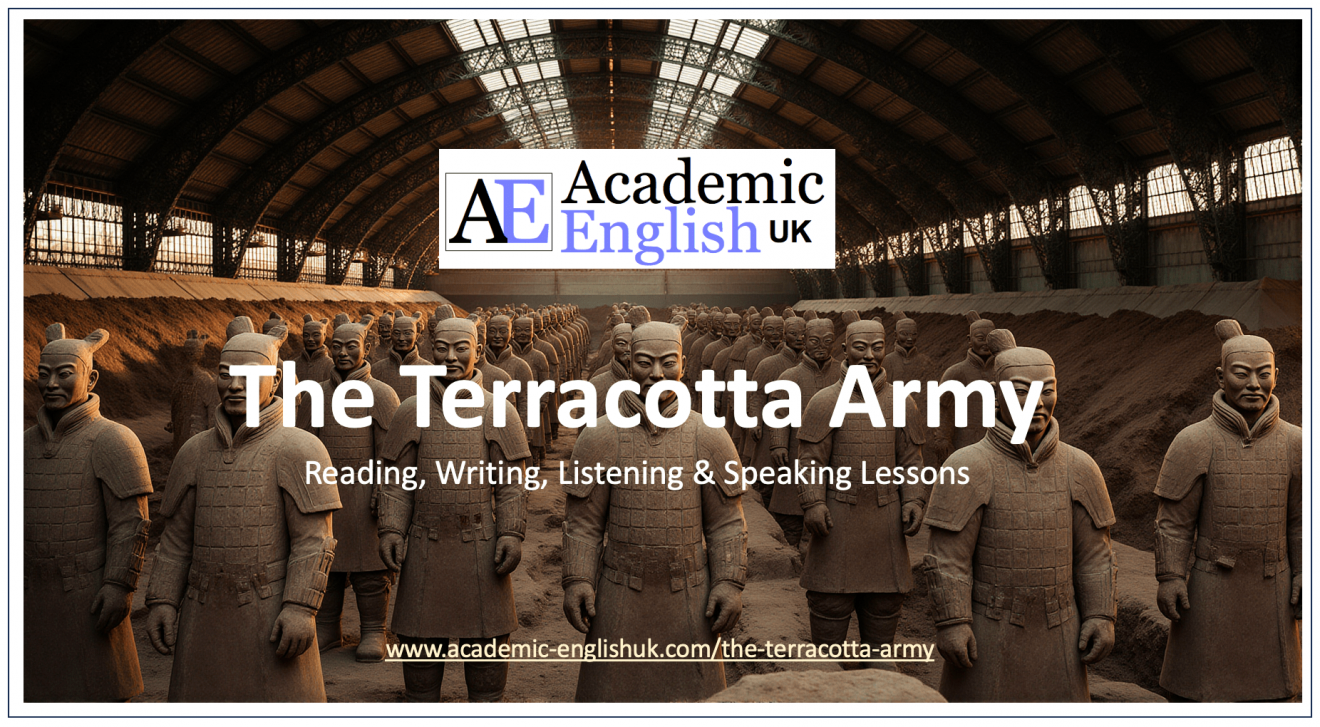
December 2025 The Terracotta Warriors are thousands of life-sized clay soldiers created during the third century BCE to guard the tomb of Qin Shi Huang, the first emperor of a unified China...
|
|
|
|
|
|
English for ART: Vocabulary Workbook
|
|
|
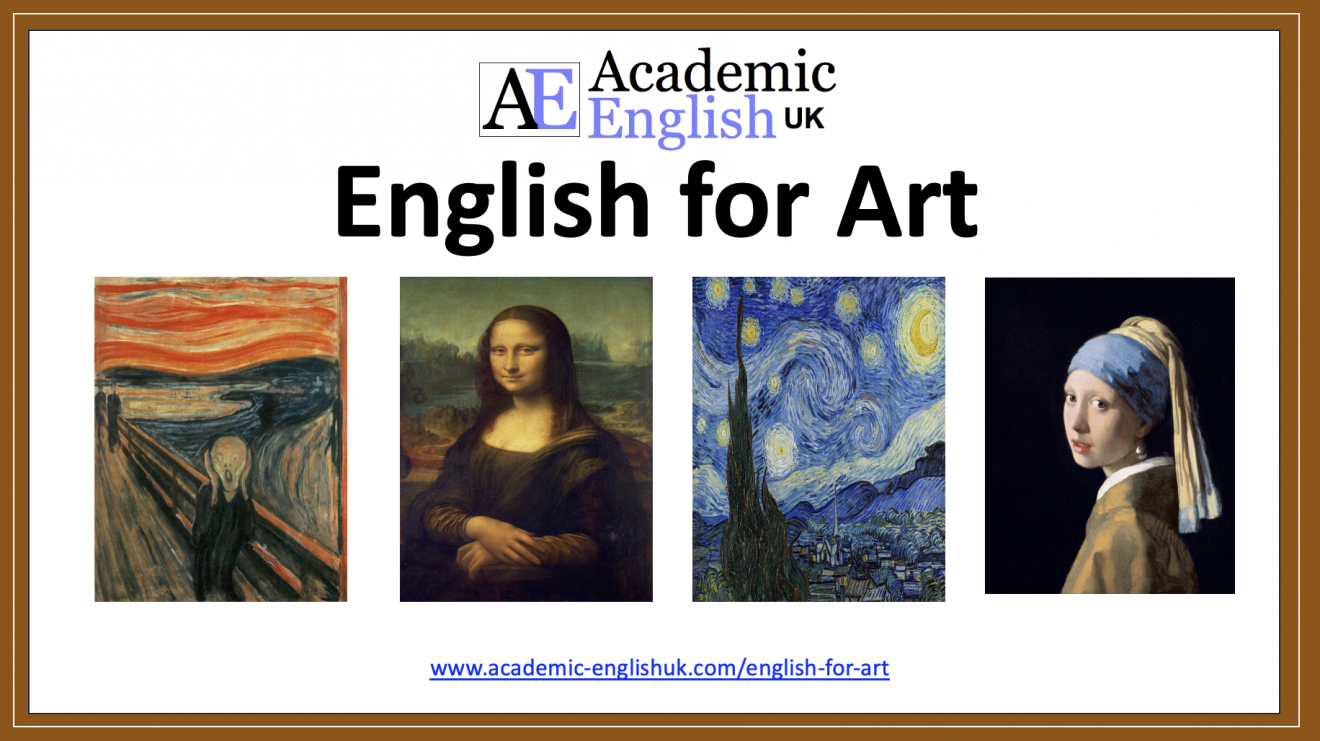
November 2025 "English for Art" refers to specialised English language instruction that develops vocabulary and communication skills relevant to visual arts, art history, and related ....
|
|
|
|
|
|
October 2025. Generative AI (Gen AI) is transforming higher education for better or for worse. This blog post includes an introductory lesson to the benefits and risks of AI and a 14-minute lecture on...
|
|
|
|
|
|
English for ART: Grammar Workbook
|
|
|
Aug / Sept 2025. "English for Art" refers to specialised English language instruction that develops grammar, and communication skills relevant to visual arts, art history...
|
|
|
|
|
|
British vs American English
|
|
|
July 2025 British Vrs American English. The main differences between British (BrE) and American (AmE) English are three main areas: 1) Vocabulary 2) Spelling 3) Pronunciation...
|
|
|
|
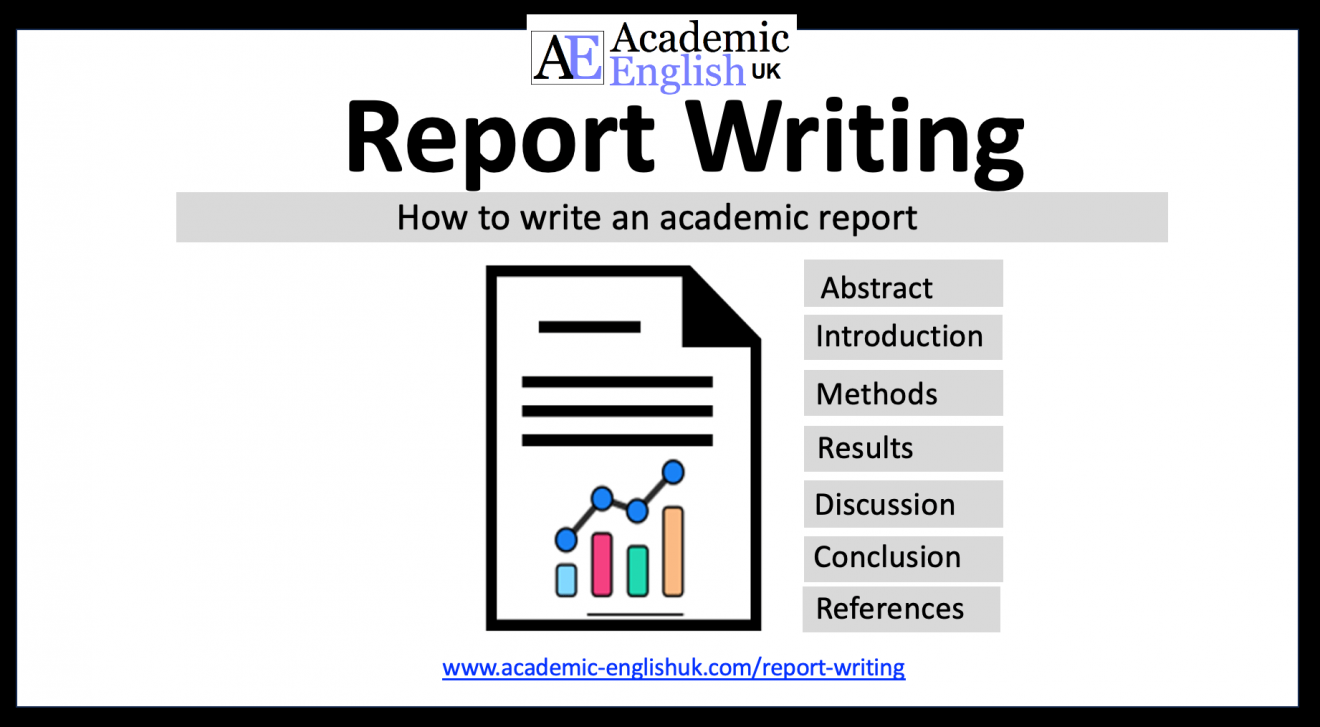
Academic Research Report Writing
|
|
|
April / May 2025. Academic Research Report Writing. An academic report is a structured document that presents information, analysis, and findings on a specific topic or research …
|
|
|
|
|
|
Error Correction in Writing
|
|
|
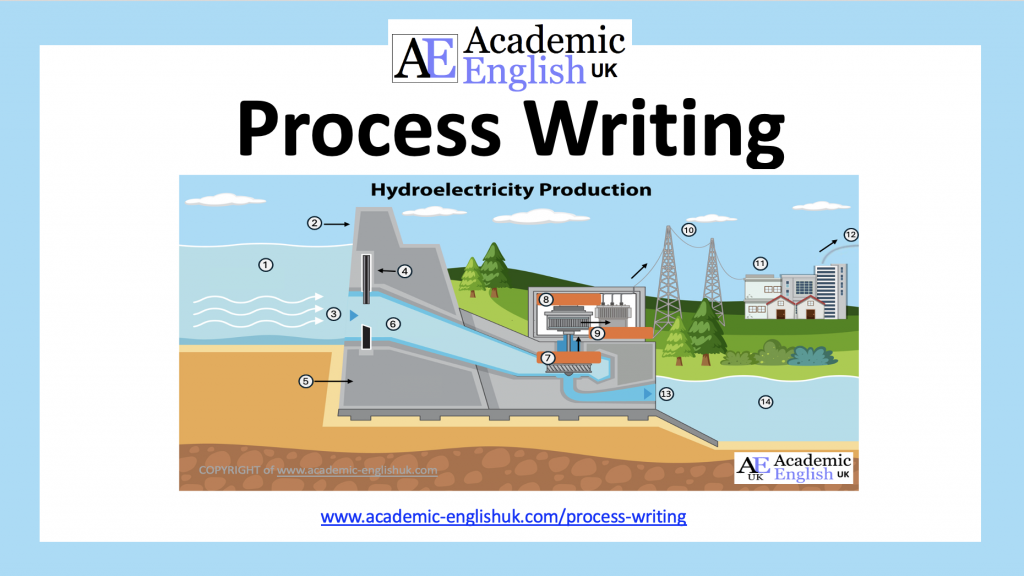
March 2025. Process writing provides a step-by-step description of how something operates or is produced. The explanation includes a range of writing skills: Describe the process in detail...
|
|
|
|
|
|
Error Correction in Writing
|
|
|
Jan & Feb 2025. Error Correction in Writing. These are a selection of lessons that focus on one specific error (prepositions, articles, tenses, wrong word, relative clauses, etc..) in a short ...
|
|
|
|
|
|
Dec 2024 Over the last 12-months of 2024 we created 70 new resources from error correction texts to critical thinking exercises. New releases for 2024 Writing Lessons, vocabulary ...
|
|
|
|
|
|
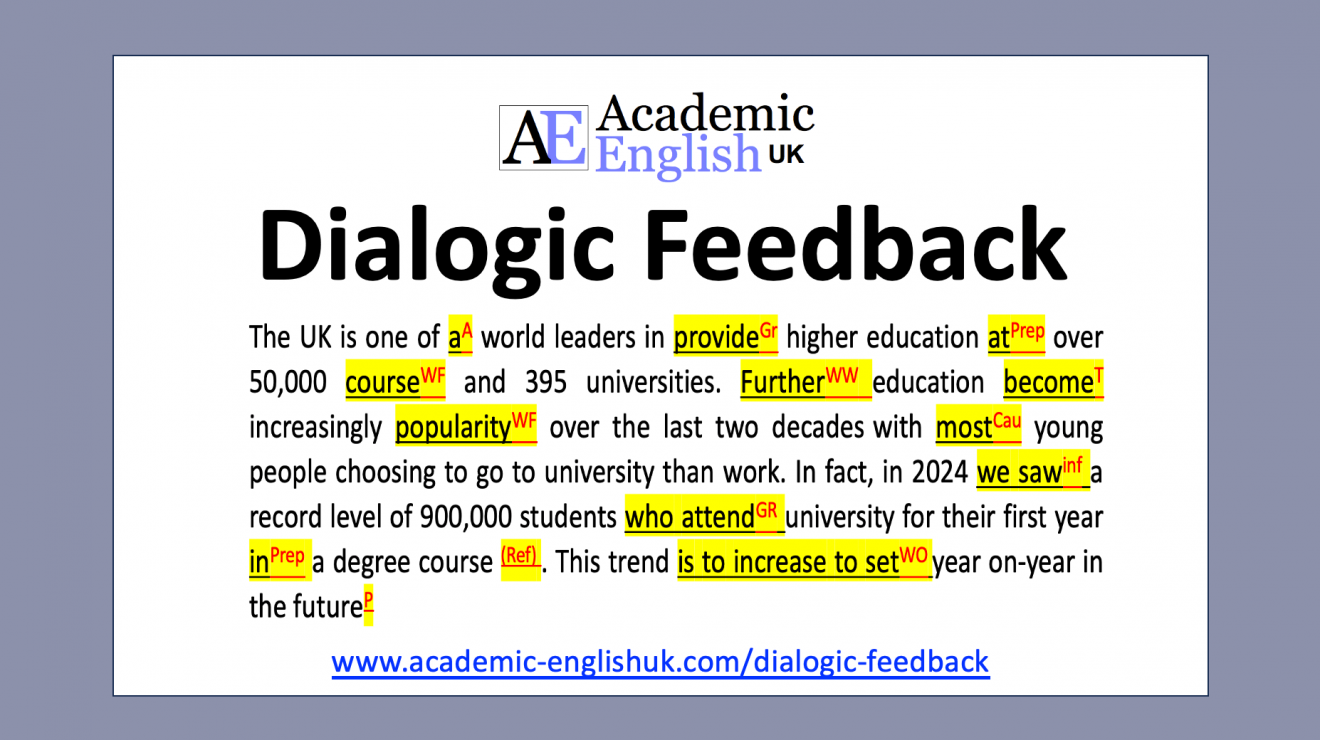
Dialogic Feedback in Academic Writing
|
|
|
Nov 2024 “Dialogic feedback is a way of providing feedback that involves a conversation between a teacher and student, rather than a one-way transmission of information. It's a collaborative ...
|
|
|
|
Want more BLOG articles? Go here for all our 2025 blogs...
|
|
|
|
|